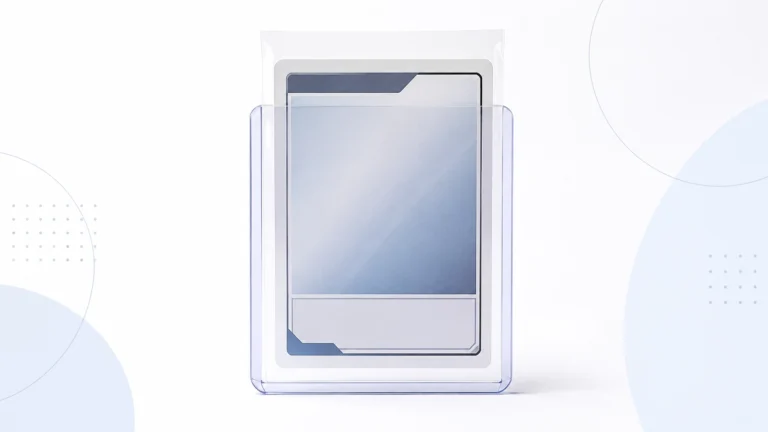
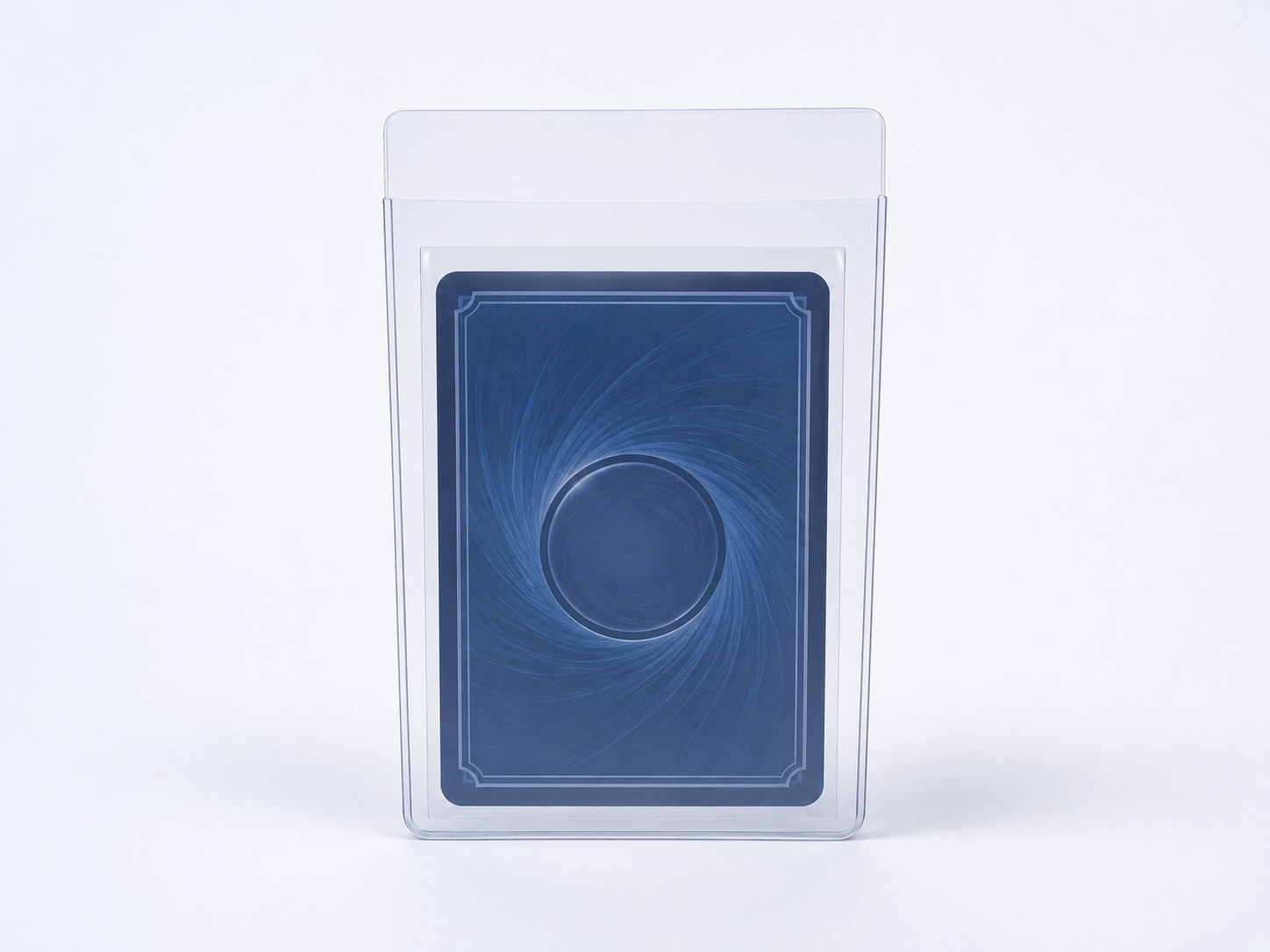
If you are sending trading cards for grading, a semi-rigid card holder is usually the type of holder you need. The card goes into a soft penny sleeve first, and that sleeved card then slides into the larger semi-rigid holder.
You will often hear collectors call these Card Savers. Card Saver is actually a brand name, but the term is commonly used for this whole style of tall, flexible card holder.
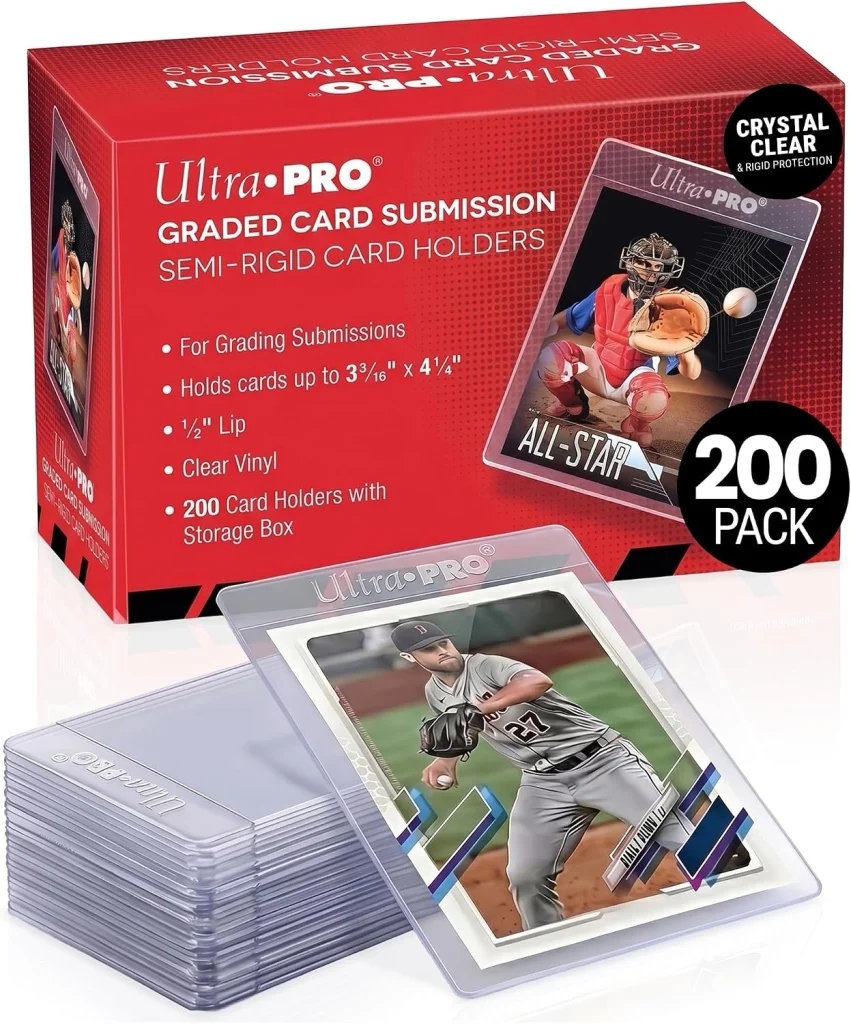
Our first choice is the Ultra PRO Semi-Rigid Tall Card Holder. The pack contains 200, Ultra PRO is one of the best-known card-protection brands, and the holders are made specifically with grading submissions in mind. They can cost a little more than some cheaper alternatives, but if you are sending valuable cards away to be graded, we would rather use a brand we know and trust.
| Holder | Pack | Card thickness | Useful feature |
|---|---|---|---|
| Ultra PRO Semi-Rigid Tall | 200 | Up to 35pt | Large box from an established brand |
| Vault X Semi-Rigid | 50 | Up to 55pt | Roomier holder |
| MintKeeper Semi-Rigid | 25 | Standard cards | Good small pack |
| Sentinel Semi-Rigid | 100 | Standard cards | Useful middle-sized pack |
The best semi-rigid card holders
Ultra PRO Semi-Rigid Tall Card Holders
The link below is an Amazon affiliate link.
Pack: 200
Card thickness: Up to 35pt
Card size: Up to approximately 81 × 108 mm
Lip: ½ inch
Material: Clear PVC
Ultra PRO is our first choice if you are buying semi-rigid holders for grading. You get 200 in the box, so it is a much bigger pack than most of the other options here and makes particular sense if you expect to grade cards more than once.
The holder is tall and slightly flexible, with a half-inch lip at the top. That lip gives you something to hold when you are opening the holder and sliding a sleeved card inside.
Ultra PRO says it takes cards up to 35pt, which covers normal Pokémon, Magic: The Gathering and other standard trading cards. As with any semi-rigid holder, we would put the card into a penny sleeve first rather than sliding the bare card directly against the plastic.
The 200-pack does mean buying a lot of holders at once, and Ultra PRO can be a little more expensive than some lesser-known alternatives. On the other hand, semi-rigid holders are not something that goes out of date. If you regularly buy cards that may eventually be graded, having a box ready is useful.
There are collector reports of Ultra PRO semi-rigids feeling fairly tight, so take your time when inserting a card. You should never need to push hard enough that you feel uncomfortable about the card’s corners.
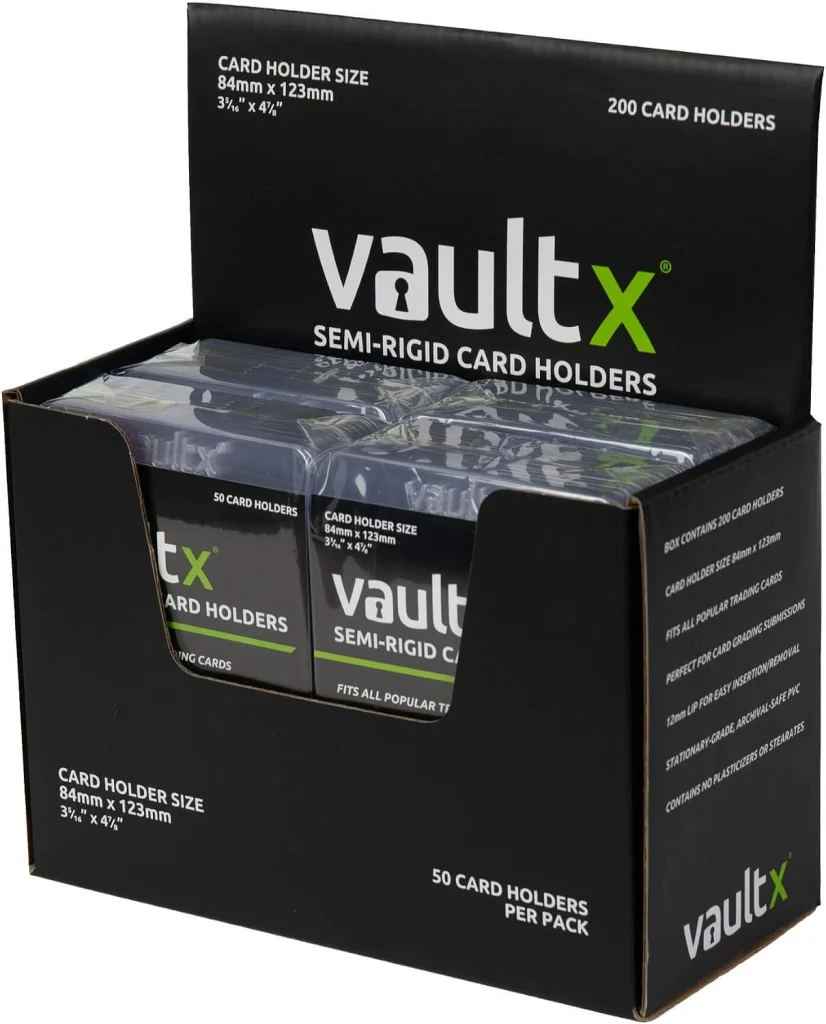
Vault X Semi-Rigid Card Holders
The link below is an Amazon affiliate link.
Pack: 50
Card thickness: Up to 55pt
Internal size: 81 × 108 mm
Lip: ½ inch
Material: Semi-rigid PVC
Vault X is the option we would look at if you want fewer holders or simply want a little more room around the card. These take cards up to 55pt rather than the 35pt maximum of the Ultra PRO holders.
For ordinary Pokémon and other TCG cards you will not normally need that extra thickness, but the slightly roomier design can make inserting a sleeved card feel less cramped. The holder still keeps the card in place once it is inside.
Vault X also uses a half-inch lip and says its PVC is archival-safe and free from plasticisers and stearates. As with its other card-protection products, the company gives you quite a lot of information about exactly what you are buying.
The 50-pack is also a sensible amount for somebody preparing their first grading submission. If you only expect to send a handful of cards, you may not need a box of 200 sitting around afterwards.
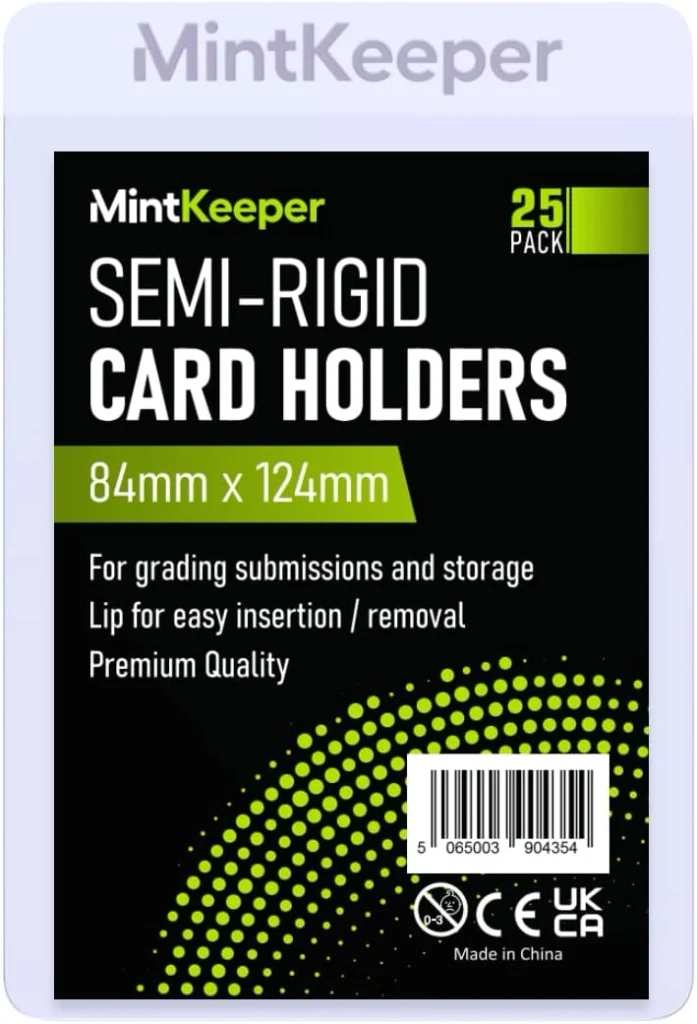
MintKeeper Semi-Rigid Card Holders
The link below is an Amazon affiliate link.
Pack: 25
Holder size: 84 × 124 mm
Fits cards up to: 80 × 106 mm
Lip: 16 mm
The MintKeeper pack is the smallest of our recommendations, with 25 holders. That can be exactly what you want if you are grading for the first time and only have a few cards to send.
The holders measure 84 × 124 mm including the lip at the top, with room inside for cards up to 80 × 106 mm. That leaves plenty of space around a normal sleeved Pokémon or MTG card without needing to squeeze it into the holder.
MintKeeper also recommends using a soft sleeve first, which is how we would prepare any card for grading. You do not have to use a MintKeeper sleeve specifically. A normal clear penny sleeve that fits the card properly is fine.
If you only need enough holders for a small submission, MintKeeper makes more sense than buying 200 simply because the larger box works out better in bulk.
Sentinel Semi-Rigid Card Holders
The link below is an Amazon affiliate link.
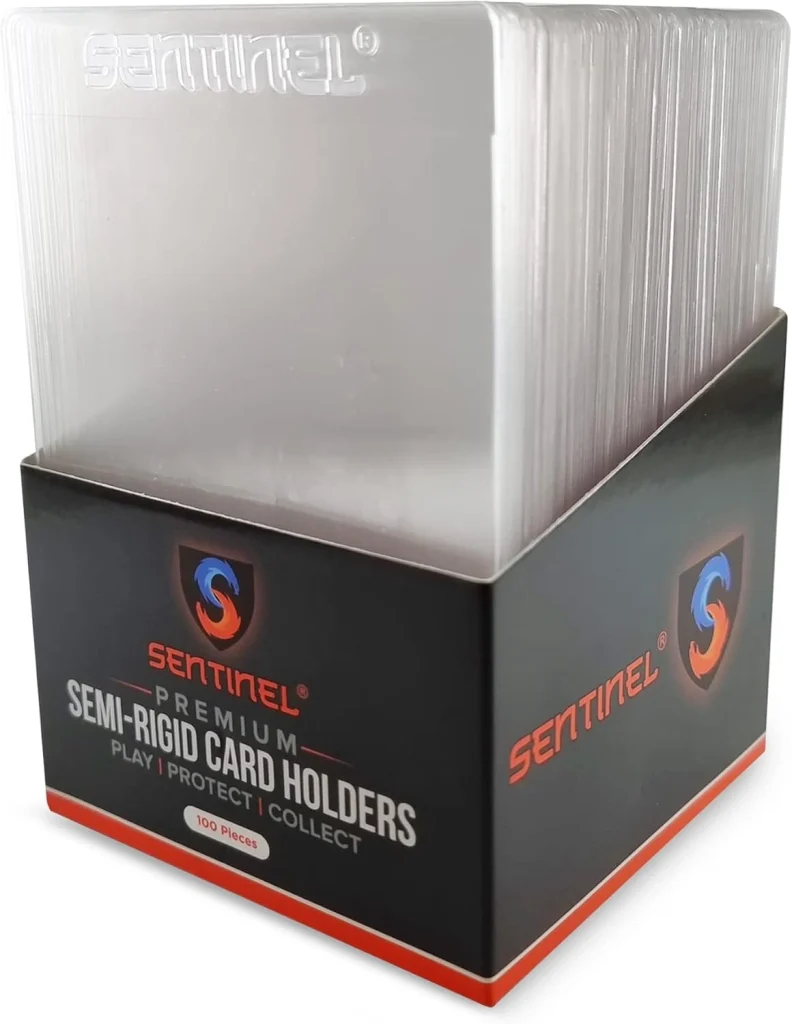
Pack: 100
Holder size: 84 × 124 mm
Material: Clear PVC
Sentinel sits neatly between the other pack sizes, with 100 semi-rigid holders in the box. If 25 or 50 feels too small but you do not want the 200-pack Ultra PRO box, this is an obvious alternative.
The holders measure 84 × 124 mm and are made from clear PVC. They are designed for standard trading cards and are sold specifically for grading submissions.
There is not a huge amount more to say about them, and that is fine. They are clear, tall semi-rigid holders in the normal grading style and you get 100 at a time.
We would still put Ultra PRO and Vault X ahead because they have a longer track record or clearer product specifications, but Sentinel is a reasonable option if the 100-pack suits how many cards you expect to use them for.
What is a semi-rigid card holder?
A semi-rigid holder sits somewhere between a soft card sleeve and a hard toploader. It is stiff enough to give the card support, but the plastic can still flex when you open it or remove the card.
That flexibility is the main reason semi-rigid holders are commonly used for grading submissions. The grading company needs to remove your card from whatever you send it in, and a semi-rigid holder gives them easier access than a hard plastic case.
They are larger than the card on purpose. The extra room and the lip at the top make it easier to open the holder and slide the sleeved card in or out without grabbing directly at the card itself.
Should you sleeve a card before putting it in a semi-rigid holder?
Yes. Put the card into a clear soft sleeve first, then put the sleeved card into the semi-rigid holder.
The soft sleeve protects the surface of the card while it is being inserted and removed. The semi-rigid holder then adds structure around the sleeved card and helps stop it moving around during transport.
For a grading submission, we would normally use a simple clear penny sleeve rather than a thick gameplay sleeve. Different types of trading card sleeves are useful for different jobs, but grading preparation is one situation where simple is usually better.
The order is:
Card → penny sleeve → semi-rigid holder.
Why are semi-rigid holders used for grading?
Grading companies have to remove every card from its holder before examining it. A semi-rigid holder gives the card support during shipping but still flexes enough for the card to be removed without fighting against a hard plastic case.
PSA currently recommends putting cards into a protective flexible pouch such as a Card Saver-style holder and advises against using normal toploaders for submissions. Beckett also asks for cards to be sent in oversized semi-rigid holders together with penny sleeves.
Always check the grading company’s latest submission instructions before sending your cards. Packaging requirements can change, and the company you are using may have slightly different rules.
Semi-rigid holder or toploader?
For everyday card protection, we would normally choose a toploader. It is much more rigid and gives better protection against bending when cards are being stored, handled or transported.
For a grading submission, we would choose a semi-rigid holder because that is the format grading companies commonly ask for.
So the simple difference is:
Toploader: everyday rigid protection.
Semi-rigid holder: grading preparation and submissions.
If you are protecting cards at home rather than preparing them for grading, our best toploaders guide covers the rigid holders we prefer.
Can you use semi-rigid holders for Pokémon cards?
Yes. Pokémon cards are standard trading card size and fit comfortably inside the semi-rigid holders above once they have been put into a penny sleeve.
The same is true for normal Magic: The Gathering, One Piece and Lorcana cards. You do not need a special Pokémon semi-rigid holder simply because the card is Pokémon.
Yu-Gi-Oh! cards are smaller, but they can still go into the same grading-style semi-rigid holder. We would use a correctly sized sleeve around the card first rather than putting the smaller bare card straight into the larger holder. Our Yu-Gi-Oh! card sleeves guide explains that smaller sleeve format.
How do you put a card into a semi-rigid holder?
Start by putting the card into a penny sleeve. Hold the semi-rigid holder near the top and gently flex the opening enough to create some space.
Slide the sleeved card in slowly rather than trying to push it straight down in one movement. If the corners catch, stop and open the holder a little more rather than applying more pressure to the card.
This is worth practising with an ordinary card before putting an expensive card into your first semi-rigid holder. Once you have done it a couple of times, the process is straightforward.
Which semi-rigid card holders should you choose?
We would start with the Ultra PRO Semi-Rigid Tall Card Holders. Ultra PRO is a well-established card-protection brand, the holders are made specifically for grading submissions and the 200-count box gives you plenty for future submissions as well as the one you are preparing now.
If you do not need 200, the Vault X Semi-Rigid Card Holders are probably our next choice. The 50-pack is more manageable for an occasional grader and the roomier 55pt capacity makes inserting sleeved cards a little less restrictive.
The MintKeeper 25-pack is useful if you are only grading a few cards, while the Sentinel 100-pack gives you another option between the small packs and the large Ultra PRO box.
There is no need to make the decision more complicated than that. Use a clear penny sleeve first, choose a proper tall semi-rigid holder and make sure you can insert the card without forcing its corners against the plastic.