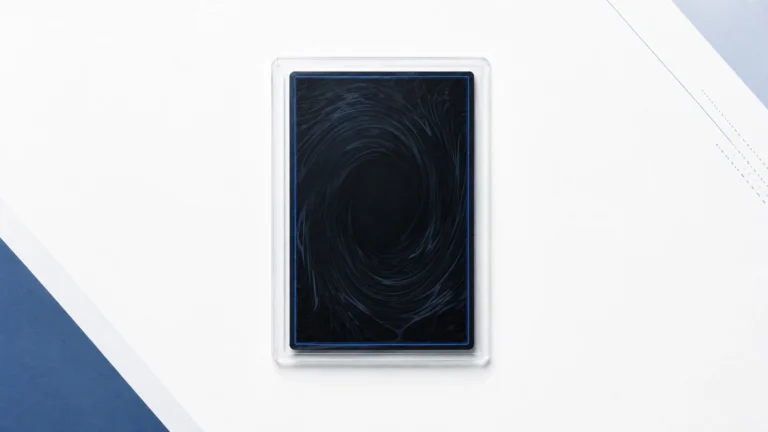
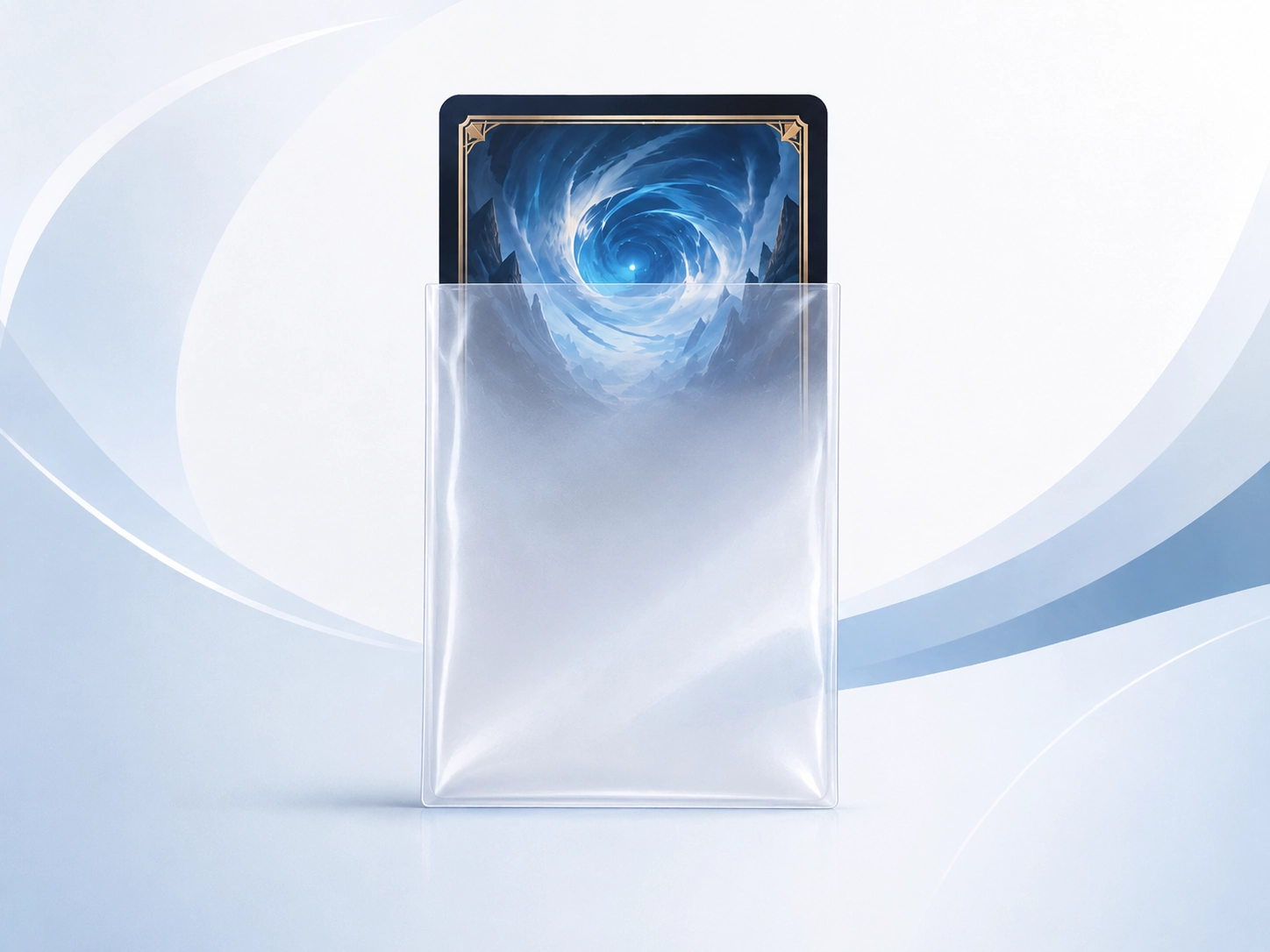
The best trading card sleeves depend on what you are protecting and how you use the cards. A collector storing hundreds of cards has different needs from someone shuffling the same deck every week.
For a large collection, an inexpensive penny sleeve is often all that is needed for basic surface protection. A deck that is regularly played benefits more from a fitted deck sleeve, while a large pack of coloured sleeves can be useful if you are sleeving several decks at once. That is why the three recommendations below are suited to different jobs rather than being ranked as three versions of the same product.
| Sleeve | Best for |
|---|---|
| Ultra PRO Penny Sleeves | Inexpensive storage and basic protection |
| Dragon Shield Standard Size Matte | Regular play and fitted protection |
| Mlikero 1,000 Coloured Sleeves | Sleeving several decks |
The best trading card sleeves
Ultra PRO Penny Sleeves
The links below are Amazon affiliate links.
Choose a pack size on Amazon:
Best for inexpensive card protection and storage
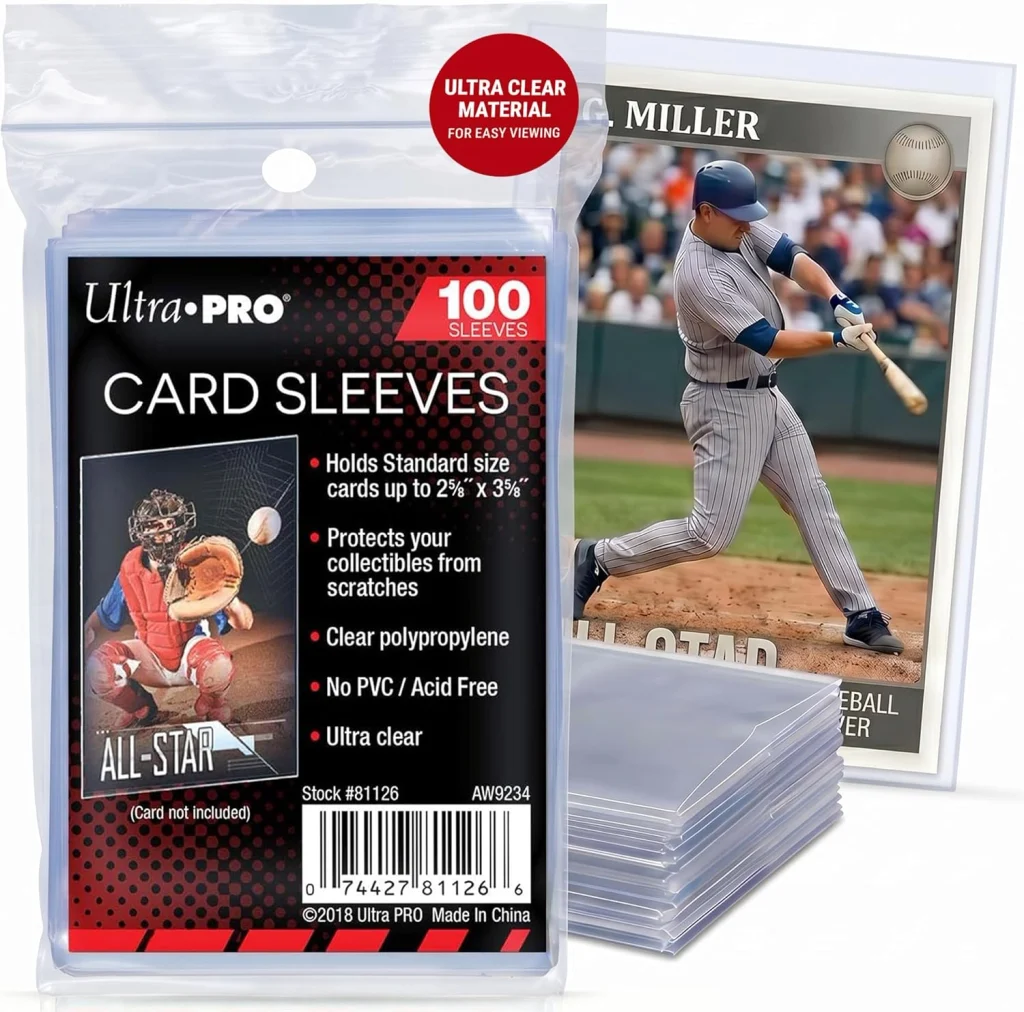
Ultra PRO Penny Sleeves are simple clear soft sleeves designed for standard-size trading cards. They are made from clear polypropylene that Ultra PRO describes as non-PVC, acid-free and archival-safe. They hold standard cards measuring approximately 63.5 × 88.9 mm and cards up to 35 pt thick.
They provide basic protection without requiring a fitted deck sleeve for every card in a collection. That makes them particularly useful when sorting or storing large numbers of cards. They can also provide the soft sleeve layer before placing an individual card into another form of protection such as a toploader.
Penny sleeves leave considerably more room around a standard trading card than a fitted gameplay sleeve. This makes cards easy to insert and remove, but also allows more movement inside the sleeve. For a deck that is regularly shuffled, a fitted deck sleeve is the better option.
Dragon Shield Standard Size Matte Sleeves
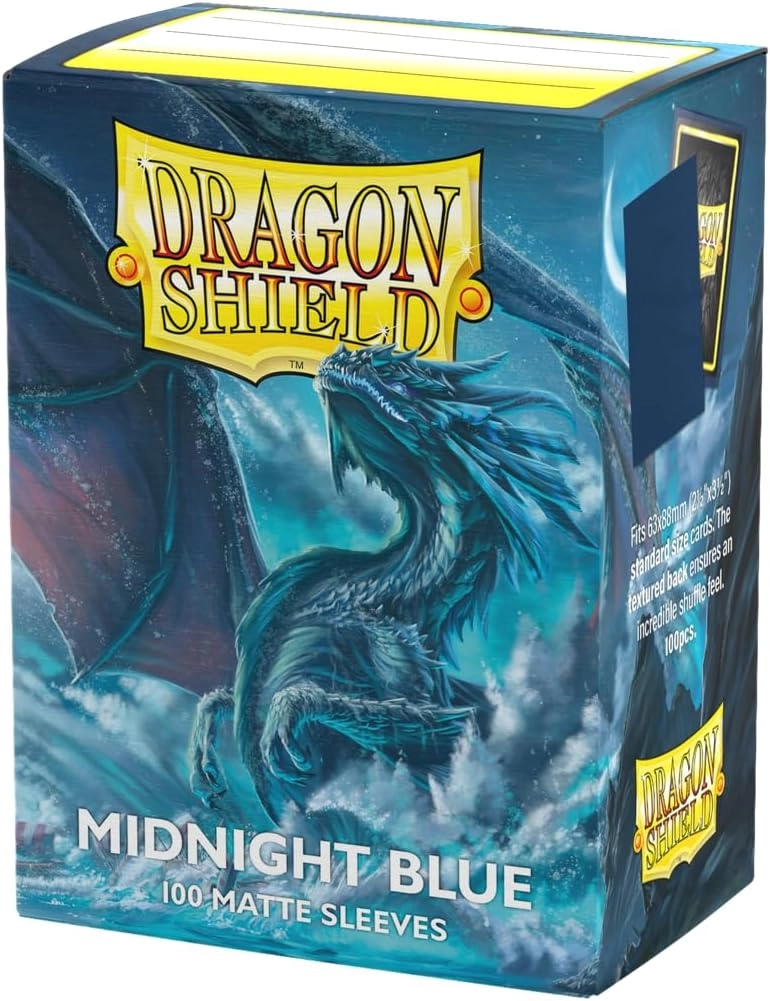
The link below is an Amazon affiliate link.
Best for regular play
Dragon Shield Standard Size Matte Sleeves are the strongest option here for decks that are regularly shuffled and played. The Standard Matte line contains 100 sleeves per pack and is designed for cards measuring up to 63 × 88 mm.
The polypropylene sleeves have a textured matte back and are listed at 120 μm thick. Dragon Shield offers the line in a wide range of colours. The standard size works with games using the common larger TCG card format, including Pokémon, Magic: The Gathering, Lorcana and Flesh and Blood.
Unlike a loose penny sleeve, a Dragon Shield Matte fits much closer to the card. That closer fit and textured back make it better suited to cards that are repeatedly handled and shuffled during play.
The sleeves will still pick up wear with regular use, so it is worth keeping spare matching sleeves if the deck is played often. They can also be used as the outer sleeve in a double-sleeved deck when a correctly sized inner sleeve is placed around the card first.
For cards that only need basic storage protection, the extra thickness is usually unnecessary. Sleeving hundreds or thousands of stored cards this way offers little practical benefit over inexpensive penny sleeves.
Mlikero 1,000 Coloured Card Sleeves
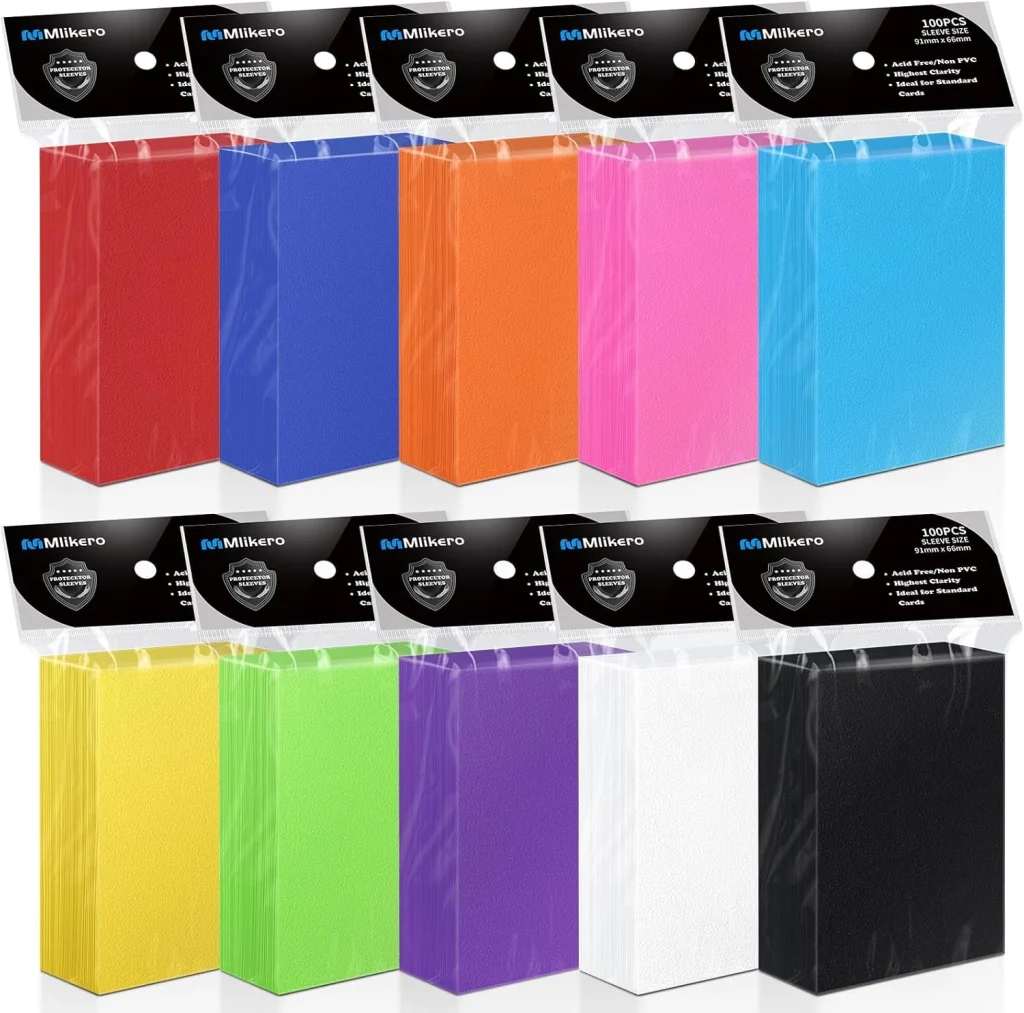
The link below is an Amazon affiliate link.
Best for sleeving several decks
The Mlikero 1,000-pack serves a different purpose from Dragon Shield. Instead of buying individual 100-count packs in separate colours, you get 1,000 sleeves split across 10 colours, with 100 sleeves of each colour.
The current listing specifies dimensions of approximately 66 × 91 mm for standard-size cards. The sleeves are described as polypropylene, with a matte side and clear glossy side, and are intended for standard-size trading and game cards.
The main reason to consider them is the quantity. If you have several decks or want to separate groups of cards by colour, one mixed pack gives you plenty of sleeves to work with.
They can be used for gameplay, but Dragon Shield is the better choice here for a deck that will be shuffled and played regularly. The appeal of the Mlikero pack is having a large number of coloured sleeves available for several decks or for organising cards, rather than getting a premium sleeve for one deck.
If that is what you need, buying one mixed pack is simpler than buying several separate colours individually.
Penny sleeves vs deck sleeves
Penny sleeves and fitted deck sleeves protect cards in different ways. A penny sleeve is a thin, loose-fitting soft sleeve that is particularly useful for storing, sorting and handling cards, as well as providing the first layer before some forms of rigid protection.
A fitted deck sleeve sits much closer around the card and is normally the better choice for cards that are repeatedly shuffled during games. Putting an inexpensive stored card into a premium gameplay sleeve may offer little practical benefit, while putting a regularly played deck into loose penny sleeves gives up much of the closer fit and handling that deck sleeves are designed to provide.
This is why there is no single type of sleeve that is automatically best for every trading card. Collectors who primarily need inexpensive storage protection may find that dedicated penny sleeves are the more practical option.
What are perfect-fit sleeves?
Perfect-fit sleeves, also called inner sleeves, fit much more closely around the card than normal deck sleeves. They are primarily useful when double sleeving trading cards.
The card goes into the inner sleeve first. That sleeved card is then placed inside a normal deck sleeve with the openings facing opposite directions, providing an additional layer around the card and closing the exposed opening left by a normal single sleeve. The trade-off is that the completed deck becomes noticeably thicker.
A perfect-fit sleeve should not be confused with a penny sleeve. Both can be clear, but a penny sleeve intentionally leaves more room around the card, while perfect-fit sleeves are designed to sit closely around it.
Standard-size vs Japanese-size card sleeves
Size matters most when you are buying a fitted deck sleeve or inner sleeve. Pokémon, Magic: The Gathering, One Piece, Lorcana and several other TCGs use the common standard card format, while Yu-Gi-Oh! cards are smaller and are normally paired with sleeves sold as Japanese or small size.
That does not mean a Yu-Gi-Oh! card cannot go into a normal Ultra PRO Penny Sleeve. Penny sleeves are intentionally loose, so they can still be useful for storing and sorting smaller cards. The difference becomes important when you want a close fit for regular play or double sleeving.
The sleeve itself also has to be slightly larger than the card it is designed to hold, so card dimensions and sleeve dimensions should not be treated as the same measurement. The main formats and common game sizes are compared in our trading card sleeve size guide.
Best card sleeves by game
Several major trading card games use the same standard-size card format, so the broad sleeve choice is often the same. A loose penny sleeve is useful for storing cards, while a fitted standard-size deck sleeve is better suited to regular play.
The product links in the table below are Amazon affiliate links.
| Game | For collections and storage | For regular play |
|---|---|---|
| Pokémon | Ultra PRO Penny Sleeves | Dragon Shield Standard Size Matte |
| Magic: The Gathering | Ultra PRO Penny Sleeves | Dragon Shield Standard Size Matte |
| One Piece | Ultra PRO Penny Sleeves | Dragon Shield Standard Size Matte |
| Lorcana | Ultra PRO Penny Sleeves | Dragon Shield Standard Size Matte |
This table is only a broad starting point. The game can still affect what you want from a sleeve, particularly when deck size, tournament rules or official sleeves come into the decision.
Pokémon uses the standard-size format, but collectors and players also have Pokémon-specific questions around ETB sleeves, binders and gameplay. Those are covered separately in our best Pokémon card sleeves guide.
Yu-Gi-Oh! is different because its cards use the smaller format. Loose penny sleeves can still be useful for storage, but fitted gameplay sleeves should normally use the appropriate Japanese or small-size format. Our best Yu-Gi-Oh! card sleeves guide covers those products separately.
Magic: The Gathering, One Piece and Lorcana all use the standard-size format, so the products above are compatible with them. More detailed buying advice can differ by game, which is better handled in dedicated guides rather than repeating the same recommendations here.
What sleeves should you use for valuable trading cards?
A valuable card does not automatically need the most expensive sleeve. The better question is what will happen to the card after it is sleeved. A valuable card that stays in a playable deck has different needs from a rare single that will sit in a collection.
For a valuable card that is regularly played, a correctly sized inner sleeve and fitted outer deck sleeve provide more coverage than a single sleeve. For an individual collectible card that is being stored instead, a soft sleeve can be combined with a more rigid holder to add structural protection.
Ultra PRO specifically designs its Penny Sleeves to work alongside its standard toploaders. A sleeve protects the card surface, while a rigid holder provides additional structural protection, which is why trading card toploaders are normally considered separately from card sleeves.
A large stored collection, a regularly shuffled deck and an individually valuable collectible do not all need the same level or type of protection.